
Kusa Jataka
Kusa Jataka
In the kingdom of Videha, ruled a wise and benevolent king named King Okkaka. His court was a place of harmony, and his people prospered. Yet, despite his outward success, a deep sorrow resided within his heart. He had a beautiful daughter, Princess Pabhavati, whose beauty was renowned throughout the land. However, she was betrothed to a foolish and cruel prince from a neighboring kingdom, a union that filled King Okkaka with dread.
The prince, named Virudha, was known for his arrogance and his short temper. He cared little for Pabhavati's gentle nature and saw her only as a prize to be won. King Okkaka, bound by an old promise, could not break the engagement, but he searched for a way to protect his beloved daughter from a life of misery. He consulted with his ministers, his wise advisors, and even the royal astrologers, but no solution seemed readily apparent.
As fate would have it, a wise and ascetic Bodhisatta, who had taken the form of a humble ascetic named Kusa, resided in the royal gardens. Kusa was renowned for his profound wisdom and his ability to see the underlying truths of situations. The king, desperate, sought his counsel.
Kusa listened patiently to the king's plight. He understood the king's love for his daughter and his fear for her future. After a long period of contemplation, Kusa revealed a plan. He proposed that he would impersonate Princess Pabhavati and marry Prince Virudha in her stead. He explained that his ascetic nature would allow him to endure the prince's cruelty, and that he would find a way to expose Virudha's true character, thereby freeing Pabhavati from the forced marriage.
King Okkaka was initially shocked by this audacious proposal. The idea of his son-in-law marrying an ascetic, let alone one who was impersonating his daughter, seemed preposterous. However, Kusa's calm demeanor and the conviction in his voice convinced the king that this was perhaps the only way. The king, torn but trusting in Kusa's wisdom, agreed to the plan.
Under the cover of darkness, with the help of the king's most trusted servants, Kusa donned the exquisite garments of Princess Pabhavati. He adorned himself with jewels and makeup, his ascetic demeanor carefully concealed beneath a veil of royal pretense. The deception was perilous, but Kusa was resolute. He was willing to undergo any hardship for the sake of Pabhavati's happiness and the well-being of the kingdom.
The wedding ceremony proceeded with an air of solemnity, though Kusa felt a deep sense of unease. Prince Virudha, blinded by his own ego and the splendor of the occasion, did not suspect a thing. He saw before him the princess he had long desired, and his heart swelled with possessive pride. Pabhavati, meanwhile, was hidden away in a secluded part of the palace, her heart heavy with fear for what awaited her.
Life with Prince Virudha was as difficult as King Okkaka had feared. The prince was demanding, cruel, and often abusive. He constantly belittled Kusa, mistaking his quiet endurance for weakness. Kusa, however, bore all insults and mistreatment with remarkable patience. He did not retaliate, nor did he reveal his true identity. He understood that his role was to endure, to observe, and to wait for the opportune moment to act.
During his time in Prince Virudha's court, Kusa witnessed firsthand the prince's tyrannical nature. He saw how Virudha oppressed his own people, how he indulged in cruelty, and how his heart was devoid of any compassion. Kusa meticulously gathered evidence of Virudha's misdeeds, documenting his injustices and his barbaric actions.
Meanwhile, Princess Pabhavati, though safe, was deeply unhappy. She longed to know what had become of her surrogate, and she worried constantly about the deception. King Okkaka, burdened by the secret, found little solace in his reign.
After a considerable period, Kusa felt that the time was right. He had gathered enough evidence to expose Prince Virudha's true character to the world. He orchestrated a grand feast, inviting dignitaries from various kingdoms, including those who had always been wary of Virudha. At the height of the feast, Kusa, still in Pabhavati's guise, stood before the assembled guests.
With a voice that resonated with newfound strength, Kusa revealed the truth. He shed his disguise, revealing his true form as the ascetic Kusa. He recounted the entire story, presenting the damning evidence of Prince Virudha's cruelty and injustice. The guests were stunned into silence. Prince Virudha, exposed and humiliated, could not deny the accusations. His reputation was shattered, and the alliances he had sought crumbled before his eyes.
The revelation caused a scandal. The neighboring kingdoms, disgusted by Virudha's actions, withdrew their support. Prince Virudha, stripped of his power and prestige, was left disgraced. King Okkaka, witnessing the successful outcome of Kusa's plan, was overwhelmed with gratitude. He brought Princess Pabhavati forward, and the kingdom rejoiced at her liberation.
Pabhavati, though initially shocked by the audacity of the deception, soon came to admire Kusa's courage and wisdom. She realized that he had saved her from a fate worse than death. Kusa, his duty fulfilled, returned to his ascetic life, leaving behind a legacy of profound sacrifice and clever stratagem. The kingdom of Videha was safe, and Pabhavati, now free, was able to find a suitable partner who valued her for who she was. The tale of Kusa's bravery and selflessness became a legend, a story of how one man's willingness to endure hardship and deception could bring about justice and true happiness.
— In-Article Ad —
💡Moral of the Story
Wisdom and courage, when combined with patience and self-sacrifice, can overcome even the most difficult and unjust circumstances, leading to truth and liberation.
Perfection: Patience (Khanti), Wisdom (Panna), Truthfulness (Sacca), Resolution (Adhitthana)
— Ad Space (728x90) —
More Jataka Tales You May Enjoy
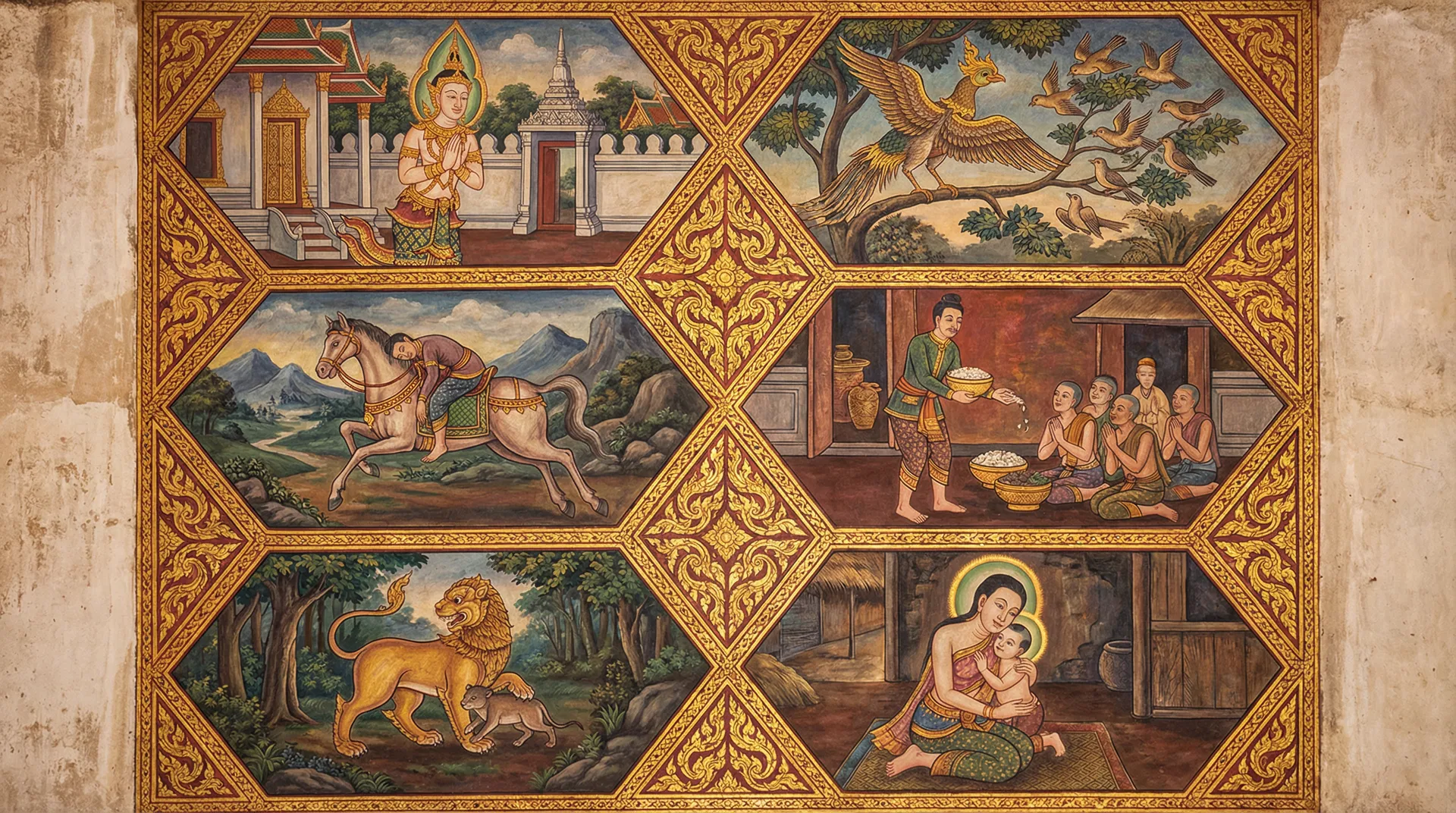 392Chakkanipāta
Moggallana Jataka
Moggallana JatakaIn the ancient land of Savatthi, there lived a wealthy merchant named Punna. He was...
💡 Generosity and devotion to the Dharma are powerful virtues that lead to immense merit and spiritual growth. True wealth is found in giving.
 317Catukkanipāta
Sutasoma Jataka
Sutasoma JatakaIn the ancient kingdom of Gandhara, nestled amidst rolling hills and verdant valleys,...
💡 True liberation from suffering comes through selfless sacrifice and detachment from worldly attachments, particularly the craving for existence.
329CatukkanipātaThe King of the Elephants Jataka
The King of the Elephants Jataka In the heart of a dense, primeval forest, where the trees soared to...
💡 True leadership demands courage, perseverance, and selfless dedication to ensure the survival and well-being of the community, even in the face of extreme adversity.
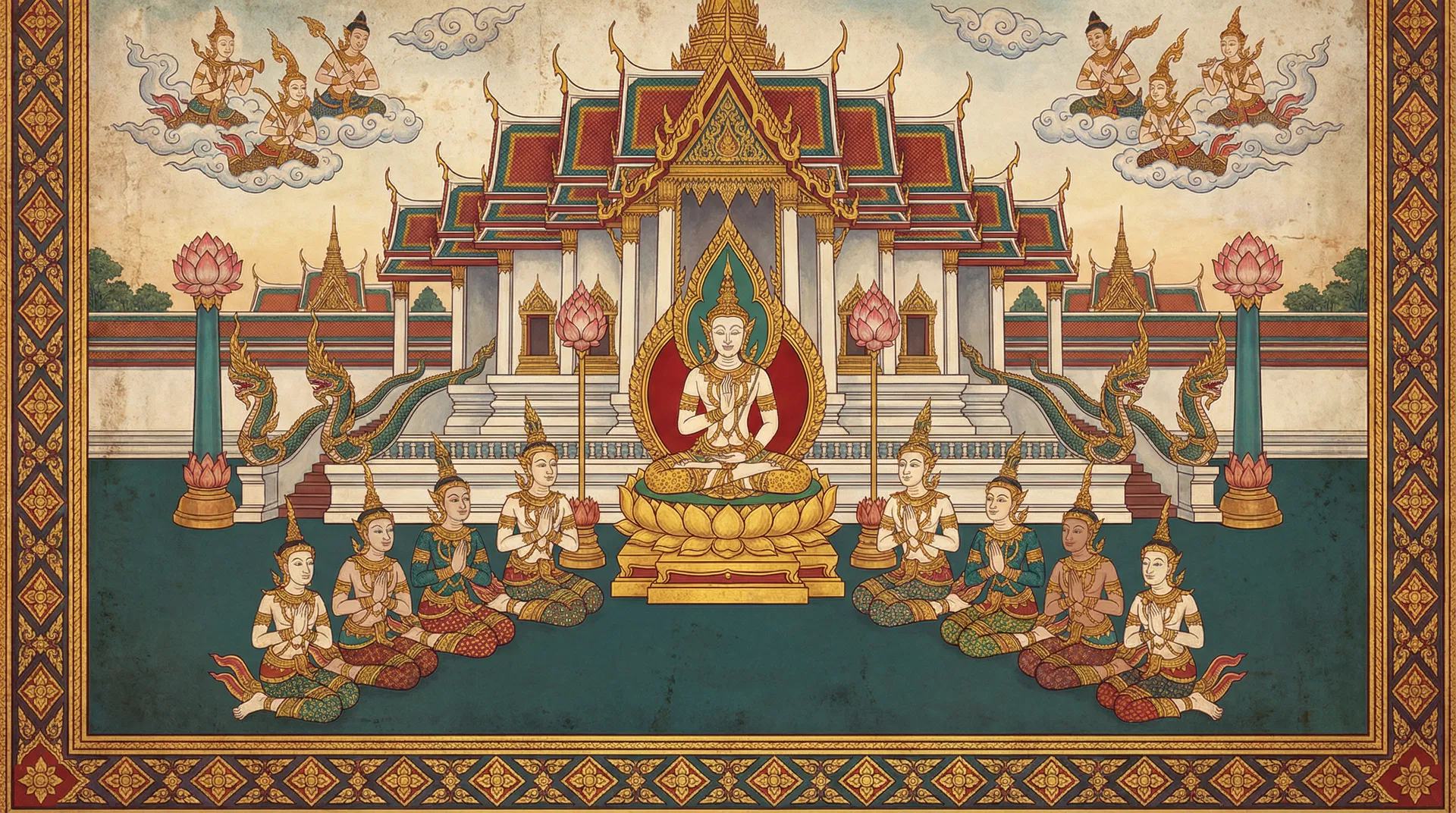 427Navakanipāta
Sakuna Jataka
The Tale of the Virtuous Bird In the heart of a dense forest, where ancient trees reached for the sk...
💡 Compassion, selflessness, and the accumulation of spiritual merit have the power to overcome great adversity and benefit all beings. In times of crisis, unity and shared good deeds are far more powerful than anger and division.
318CatukkanipātaMahosadha Jataka
Mahosadha JatakaIn the ancient city of Mithila, capital of the prosperous kingdom of Videha, lived a...
💡 Intellect and wisdom, when combined with foresight and compassion, are the most powerful tools for resolving conflicts, ensuring justice, and promoting the welfare of society.
395ChakkanipātaSaddanta Jataka
Saddanta JatakaIn the dense, ancient forests of the Himalayas, there roamed a magnificent white elep...
💡 Greed leads to suffering and emptiness. True happiness comes from detachment, compassion, and inner virtues.
— Multiplex Ad —